


gazin.project.headline
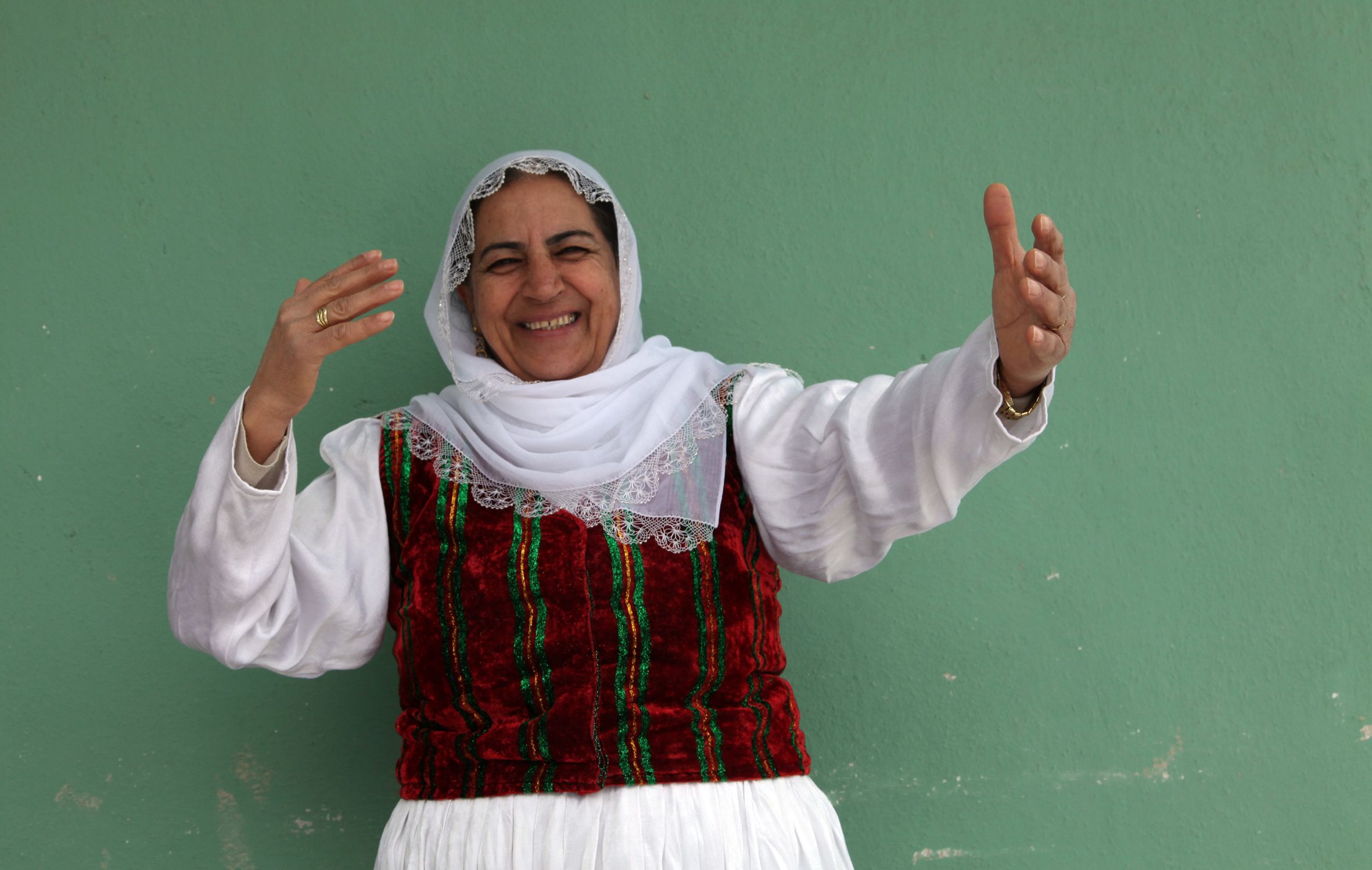


Dengbêj Gazîn
Dengbêj Gazîn, whose given name was Raziye Kızıl, was born in 1959 in the village of Ünsüz (Yassıca) in the region of Tetwan (Tatvan). She learned much of her musical repertoire from her dengbêj aunt and other family members. She became familiar with artists like Eyşe Şan and Meryem Xan while listening to Radio Yerevan, and began dreaming of one day following in their footsteps.
In 1974, she married and moved to Wan (Van). Since it was not considered appropriate for newly married women to speak openly, let alone sing, she continued to sing to herself in private. Without her family or wider social circles knowing, she secretly traveled to Unkapanı in Istanbul to make her first professional recordings, becoming one of the first female dengbêjs to enter the music industry. These tapes—on which she chose to call herself Gazîn instead of Raziye as a stage name, meaning »complaint« or »lament«—gradually brought her growing fame. While her neighbours listened to her cassettes with admiration, she could not reveal that this voice belonged to her. Her secret only came to light years after her first tapes were released. Her pursuit of being a dengbêj, singing at weddings and participating in concerts and festivals was met with considerable resistance. But Gazîn eventually made her family and wider social circles accept her passion, continuing to work and record despite these obstacles.
She often performed as the only female dengbêj at concerts and dengbêj gatherings. In 2010, she founded Komela Jinên Dengbêj (The Association of Women Dengbêjs). She put great effort into running the association and carried out various projects. She held music lessons for girls and young women from villages and surrounding neighborhoods at the association, conducted research on local female dengbêjs, and organized performances, creating a space for women to make their voices heard.
Gazîn performed at concerts in Amed (Diyarbakır), Cizîr (Cizre), Agirî (Ağrı), Qoser (Kızıltepe), Êlih (Batman), Sêrt (Siirt), Bismil, Bazîd (Doğubayazıt), Tetwan (Tatvan), Wan (Van), Istanbul, Silêmanî (Sulaymaniyah), Paris, Geneva, Oslo, Yerevan, und Stockholm. Alongside the anonymous kilams and strans she often sang, she also performed her own compositions. After the 2011 Wan earthquake, she wrote and performed the kilam »Dewrane« (Oh Fate), and after the Roboski massacre, she composed and sang »Kula Roboskî« (The Pain of Roboskî). İlkay Akkaya subsequently made a recording of this kilam together with Gazîn and released it under her own name.
Dengbêj Gazîn, who had four daughters, one son, and ten grandchildren, suffered a stroke while singing a kilam at her home in Wan on August 19, 2018, and passed away on August 21.
This section has been adapted from Ergun Sibel Yücel and Marlene Schäfers’s book Ez Gazîn Im: Jineke Dengbêj (Aram, 2021), p. 7-8.